Blog
Everything You Need to Know About Complete Fire Safety System Installation in India

Every year, fires cause heavy losses to factories, warehouses, offices, hospitals and homes across India. In most cases, the damage is far worse because the building had no proper protection or the equipment was poorly installed or never maintained. A professional Fire Safety System Installation is not just a legal formality. It protects lives, saves property and keeps your business running.
This guide covers what a complete setup includes, which Indian standards apply, how the process works and how to choose the right installation partner.
What Is a Complete Fire Safety System?
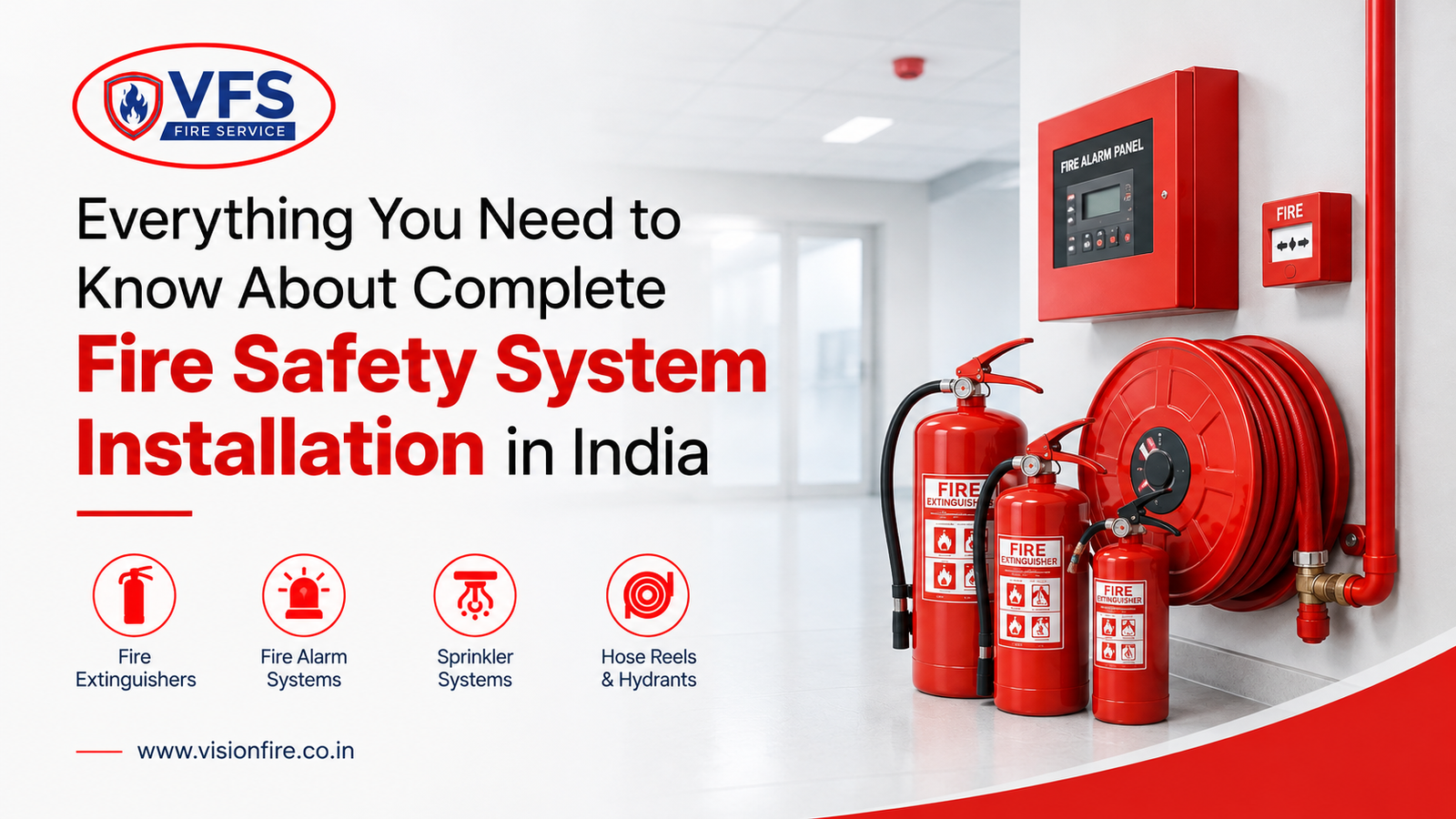
A complete fire safety system works in layers. It detects a fire early, alerts people, helps them evacuate, and controls or extinguishes the fire before it spreads. No single device can do all of this, so a well-planned Fire Safety System Installation combines several systems:
- Detection and alarm: smoke detectors, heat detectors, manual call points and control panels
- Suppression: sprinklers, hydrants, hose reels and portable extinguishers
- Passive protection: fire-resistant doors, fire-rated walls and clear escape routes
- Support equipment: emergency lighting, signage and foam units for high-risk areas
The right combination depends on your building type, size, occupancy and the materials stored inside.
Why Fire Safety System Installation Matters in India
India’s cities have dense buildings, heavy electrical loads and crowded industrial clusters. Short circuits, overloaded wiring, flammable stock and blocked exits are common causes of serious fires. Three reasons make proper installation essential.
1. Legal compliance. The National Building Code of India (NBC 2016, Part 4) sets fire and life safety requirements, and each state enforces its own fire laws. Most commercial, industrial and high-rise buildings need a Fire NOC from the local fire department.
2. Insurance and liability. Insurers often expect certified, working fire protection. Inadequate systems can complicate claims after a loss.
3. Business continuity. A small fire that is controlled quickly means hours of downtime. An uncontrolled one can mean months, or permanent closure.
Core Components of Fire Safety System Installation
Fire Alarm System
A Fire Alarm System is the first line of defence. Detectors sense smoke, heat or flame and send a signal to a central control panel, which triggers sirens and strobes throughout the building. Early warning gives occupants time to leave and gives responders a head start.
There are two main types:
- Conventional systems divide a building into zones. They suit small and mid-sized premises.
- Addressable systems identify the exact device that triggered. They suit large facilities, malls and high-rises.
Installation should follow IS 2189, which covers the selection, installation and maintenance of automatic fire detection and alarm systems.
Fire Sprinkler System
A Fire Sprinkler System controls a fire automatically, even when nobody is present. Each sprinkler head has a heat-sensitive element. When the temperature at that point reaches a set level, only that head opens and sprays water over the fire. This limits both fire spread and water damage.
Sprinklers are widely used in warehouses, factories, hotels, hospitals and commercial complexes. Design and installation should align with IS 15105, covering pipe sizing, water supply, pump capacity and head spacing. Poor hydraulic design is a common reason sprinklers underperform in real emergencies.
Fire Hydrant System
The Fire Hydrant System provides a high-volume water supply for firefighting. It includes a water storage tank, pumps, a network of pipes, landing valves, hose pipes and nozzles. Internal hydrants serve the inside of buildings, while external yard hydrants cover large campuses and industrial plots.
Key installation points include:
- Reliable pump sets with a standby option
- Correct pipe diameter and pressure at the farthest outlet
- Landing valves placed on every floor and at accessible locations
- Hose boxes with hoses and nozzles in good condition
IS 3844 guides internal hydrant installation in multi-storeyed buildings.
Fire Extinguishers and Hose Reels
Portable Fire Extinguishers are the quickest tool for tackling a fire in its first minutes. Different fires need different agents:
- ABC dry powder: general-purpose use for solids, liquids and gases
- CO2: electrical panels, server rooms and sensitive equipment
- Foam: flammable liquids and oil-based hazards
- Water-based: ordinary combustibles such as paper and wood
Large industrial sites may also need trolley-mounted extinguishers, ceiling-mounted units or mobile foam units. Fire hose reels offer a continuous, ready-to-use water supply for trained staff in the early stages of a fire. Placement and maintenance should follow IS 2190.
Step-by-Step Fire Safety System Installation Process
A reliable installer follows a clear process rather than just fitting equipment.
- Site survey and risk assessment: The team studies the layout, occupancy, fire load and existing equipment.
- System design: Engineers select the right mix of detection, suppression and passive protection, and prepare drawings.
- Material selection: Only certified, standards-compliant products should be used.
- Installation: Technicians fit pipes, cables, panels, devices and equipment as per the approved design.
- Testing and commissioning: Every system is tested, including alarm triggers, pump performance and pressure checks.
- Documentation and Fire NOC support: Test reports, drawings and certificates are prepared for the fire department.
- Training: Staff learn to use extinguishers, respond to alarms and follow evacuation routes.
Understanding Fire NOC and Compliance
A Fire NOC (No Objection Certificate) confirms that your building meets the fire safety norms of the local authority. Requirements vary by state, building height, area and use, so confirm the rules with your local fire department before starting. A good installation partner will help with documentation, inspection readiness and renewals, saving you time and avoiding delays.
Fire Safety Needs by Property Type
- Factories and warehouses: Sprinklers, hydrants, foam systems and heavy-duty extinguishers for high fire loads
- Commercial buildings and offices: Addressable alarms, extinguishers, emergency lighting and clear escape routes
- Hospitals and schools: Reliable detection, fire-resistant doors and well-planned evacuation systems
- Residential societies: Hydrants, alarms, extinguishers and refuge areas
- Hotels and malls: Full detection and suppression coverage with regular drills
Why Maintenance Matters as Much as Installation
Even the best system fails if it is neglected. Extinguishers expire, pumps seize, batteries die and sprinkler heads get blocked by paint or storage. A yearly Annual Maintenance Contract (AMC) covers regular inspection, testing, refilling and replacement of faulty parts. Combine this with periodic fire drills and a basic safety audit to keep your system ready.
How to Choose the Right Installation Partner
Before you hire, check these points:
- Experience with projects like yours, ideally with references
- Product quality: certified equipment and genuine spare parts
- End-to-end service: design, supply, installation, refilling and AMC under one roof
- Compliance knowledge: support with NBC norms and Fire NOC paperwork
- After-sales support: quick response when something goes wrong
- Transparent pricing: a clear quotation with no hidden costs
Cost depends on the building size, risk level, system type and equipment grade. Always compare detailed quotations rather than choosing only on price. The cheapest option often costs more after repairs and replacements.
Get Professional Help with Fire Safety System Installation
Vision Fire Protection Service, based in Bhiwandi, Thane, supplies and installs fire extinguishers, fire alarm systems, hydrant systems, hose reels, sprinkler systems and fire-resistant doors for industrial, commercial and residential clients across India. Its services also include refilling and annual maintenance.
Final Thoughts
A well-planned Fire Safety System Installation combines early detection, fast suppression, compliant design and regular maintenance. Start with a professional risk assessment, choose certified equipment, and work with a team that supports you from design to Fire NOC and beyond. Fire protection is an investment you hope never to use, but one you will be very glad to have.