


Blog
Fire Resistant Doors Installation in Mumbai: Safety Solutions for Commercial and Industrial Sites

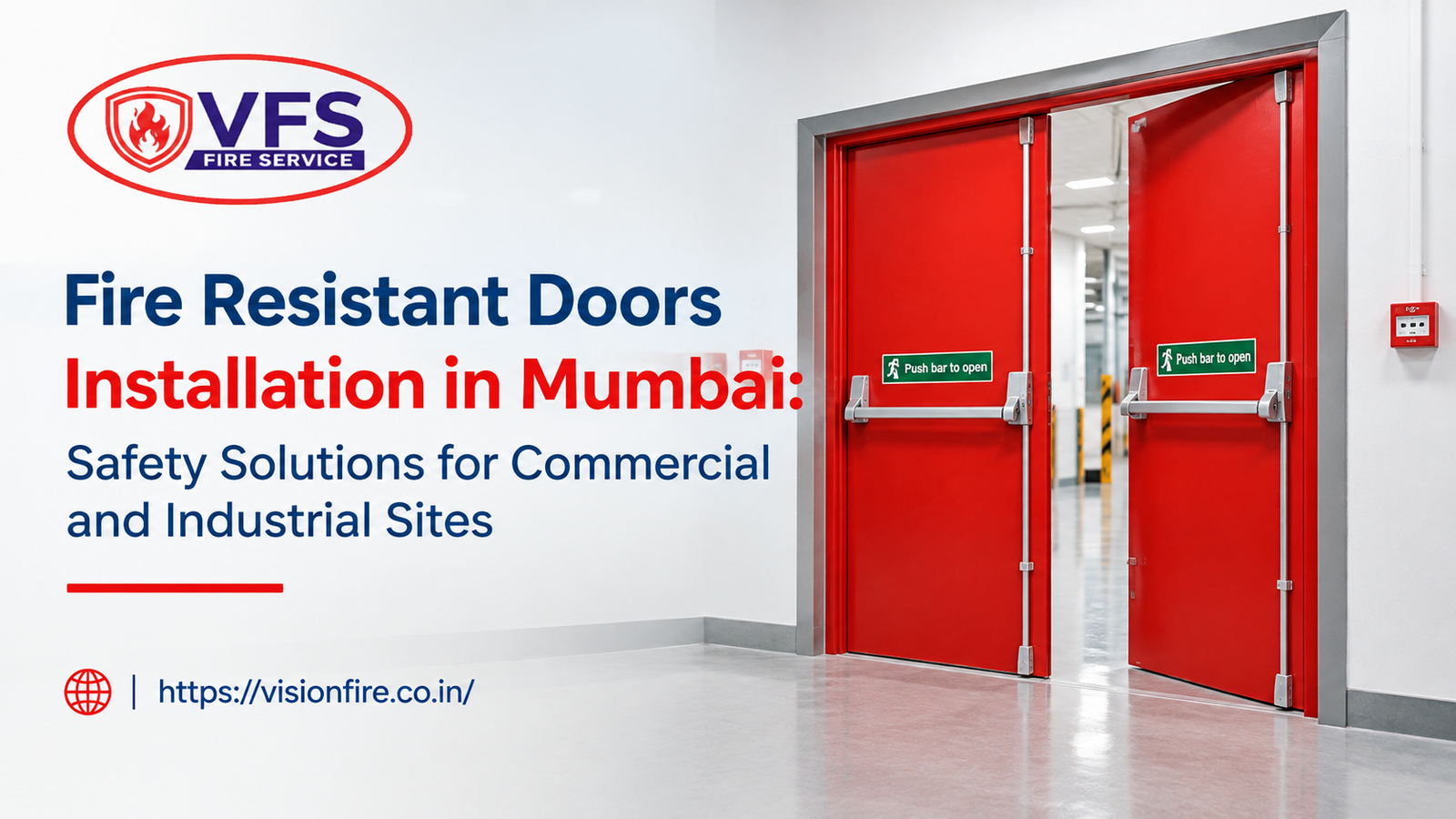
Mumbai is one of the most densely built cities in India. High-rise offices, packed warehouses in Bhiwandi and Taloja, pharma plants in Thane and factories along the MIDC belt all share one risk: a fire that starts in one room can reach the rest of the building within minutes. Doors are often the weak point, because an ordinary door burns through quickly and lets flames and smoke travel.
That is why more building owners are investing in Fire Resistant Doors. These doors are built and tested to hold back flames, heat and smoke for a fixed period, giving people time to escape and firefighters time to respond. This guide covers how they work, where to use them, how installation is done and how to choose a reliable provider in Mumbai.
Why Commercial and Industrial Sites Need Fire Resistant Doors
Fire safety in a large building depends on compartmentation, which means dividing the building into sections so a fire stays in one place. Walls and floors do part of the job, but every opening in them is a gap. Properly installed Fire Resistant Doors close these gaps so a fire cannot spread through corridors, staircases, shafts and storage areas.
The benefits go beyond fire containment:
- Protected escape routes, since staircases and corridors stay usable for longer
- Reduced smoke spread, which is the biggest cause of casualties in building fires
- Less property damage, because a fire confined to one zone destroys less
- Better insurance and audit outcomes, as certified doors support compliance records
- Added security and, in many designs, sound insulation
For industrial sites, these doors also separate high-hazard zones such as chemical stores, boiler rooms, electrical panel rooms and generator areas from the rest of the plant.
How Fire Resistant Doors Work
A fire door is a complete assembly, not just a door leaf. Its performance depends on every component working together:
- Door leaf: Usually steel with a fire-resistant core such as mineral wool, gypsum or honeycomb. Wooden and glazed versions also exist.
- Frame: A strong frame fixed firmly into the wall, so the door stays in place under heat.
- Intumescent strips: These swell when heated and seal the gaps around the door.
- Smoke seals: These limit smoke leakage in the early stages of a fire.
- Self-closing device: A closer that shuts the door automatically after use.
- Fire-rated hardware: Hinges, locks and handles that can survive high temperatures.
Fire resistance is measured in time, commonly 60, 90 or 120 minutes, and can go higher for special applications. The rating you need depends on the building type, the hazard level and local fire safety requirements.
Types of Doors Used in Mumbai Buildings
Different areas need different doors. Common options include:
- Steel fire doors for industrial units, staircases, electrical rooms and service shafts, where strength matters most
- Glazed fire doors with fire-rated glass for corridors and lobbies that need light and visibility
- Wooden fire doors for offices, hotels and hospitality spaces where appearance counts
- Acoustic fire doors for areas that need both noise control and fire protection
Choosing the right type is part of a good site assessment, which is why guidance from an experienced fire safety company is valuable before you buy.
Fire Resistant Doors as Part of a Complete Fire Safety System
Doors work best alongside active fire protection. A well-protected site combines them with fire alarm and detection systems, hydrant systems, sprinklers, hose reels and portable and trolley mounted extinguishers. Alarms detect a fire early, extinguishing systems fight it and doors contain it.
Vision Fire Protection Service, based in Bhiwandi, Thane, supplies and services fire fighting equipment, fire protection systems and safety products for industrial, commercial and residential clients, including installation support, refilling and annual maintenance. Its range, which includes Fire Resistant Doors, means clients can arrange passive and active fire protection through one vendor instead of coordinating several contractors.
Fire Resistant Doors Installation: What the Process Looks Like
Installation quality decides whether a certified door performs as tested. A door that is correctly rated but badly fitted can fail early. A professional installation usually follows these steps:
- Site survey: The team inspects the building, measures openings and identifies fire compartments and escape routes.
- Rating and type selection: Door ratings and types are matched to each zone’s hazard level and use.
- Supply and preparation: Doors, frames and hardware are delivered, and the wall openings are checked for suitability.
- Fitting: Frames are fixed securely, leaves are hung with correct gaps and seals, closers and hardware are fitted.
- Testing: The door is checked for smooth closing, latching and a proper seal.
- Handover: The client receives documentation and maintenance guidance.
Common Installation Mistakes to Avoid
Even good products fail when these errors occur:
- Gaps around the frame that are too large or filled with unsuitable material
- Missing or damaged intumescent strips and smoke seals
- Non-rated hinges, locks or closers fitted to a rated door
- Doors wedged open with stoppers, which defeats their purpose
- Cutting or drilling into the leaf after installation without approval
Fixing these mistakes later costs more than doing the installation properly the first time.
Compliance Requirements for Mumbai Properties
Fire safety is a legal matter in Maharashtra. Buildings must follow the Maharashtra Fire Prevention and Life Safety Measures Act, 2006, along with the National Building Code of India and relevant Bureau of Indian Standards guidelines. In Mumbai, the Mumbai Fire Brigade is the authority that inspects premises and issues fire-related approvals.
Requirements depend on the building type, height, occupancy and use, so always confirm exact door ratings and locations with your architect, fire consultant or the fire authority. Using certified doors with proper documentation also makes audits and insurance claims smoother.
Maintenance and Inspection: Keeping Doors Ready
A fire door only protects you if it works on the day of a fire. Regular checks should confirm that:
- The door closes fully and latches on its own
- Seals and intumescent strips are intact
- Hinges and closers are secure and not leaking or loose
- Nothing blocks the door or holds it open
- The glass, if fitted, is not cracked or damaged
Heavy industrial traffic, forklifts and Mumbai’s humid, salty coastal air can wear doors and hardware faster than in other cities. An annual maintenance contract with scheduled inspections and a written record is a practical way to keep every door compliant and working.
How to Choose the Right Provider in Mumbai
Fire doors are a safety purchase, so price should not be the only factor. Look for:
- Certified, tested products with proper documentation
- Experience with commercial and industrial projects
- Help with site assessment and correct rating selection
- Trained installers, not general carpenters
- After-sales support and AMC options
- A local presence in the Mumbai–Thane region for fast service
Ask for certificates before you order, and ask whether the provider can also support your extinguishers, alarms and hydrants so your whole fire safety plan stays consistent.
Final Thoughts
A fire cannot be predicted, but how far it spreads can be controlled. Certified, correctly installed and well-maintained Fire Resistant Doors protect lives, limit damage and help your building meet its legal responsibilities.
If you manage a commercial or industrial property in Mumbai, review your fire compartments today. Check whether your existing doors are rated and certified, whether they close properly, and whether any are propped open. Then speak to an experienced provider about a proper survey and installation.