Blog
Fire Sprinkler System Installation in India: Don’t Wait for a Fire to Take It Seriously

Every year, preventable fires destroy factories, warehouses, offices and homes across India. In most cases, the damage grows because the fire was not controlled in its first few minutes. A properly planned Fire Sprinkler System Installation is one of the few safety measures that reacts on its own, without waiting for a person to notice smoke or reach an extinguisher.
If your building still relies only on portable extinguishers, this guide explains why that is risky and what a proper sprinkler setup involves.
Why Fire Sprinkler System Installation Cannot Wait
Many owners postpone Fire Sprinkler System Installation until after an incident, an inspection notice or an insurance query. By then, the cost is no longer just the installation. It includes lost stock, halted production, legal trouble and, worst of all, risk to human life.
Fires double in size very quickly. A sprinkler head activates at the source of the heat, often within a minute or two, and controls the fire until firefighters arrive. A small fire that is contained early causes far less damage than one that spreads across a floor or warehouse.
Sprinklers also protect during hours when nobody is present: nights, weekends and holidays, when most industrial fires go unnoticed.
How an Automatic Fire Sprinkler System Works
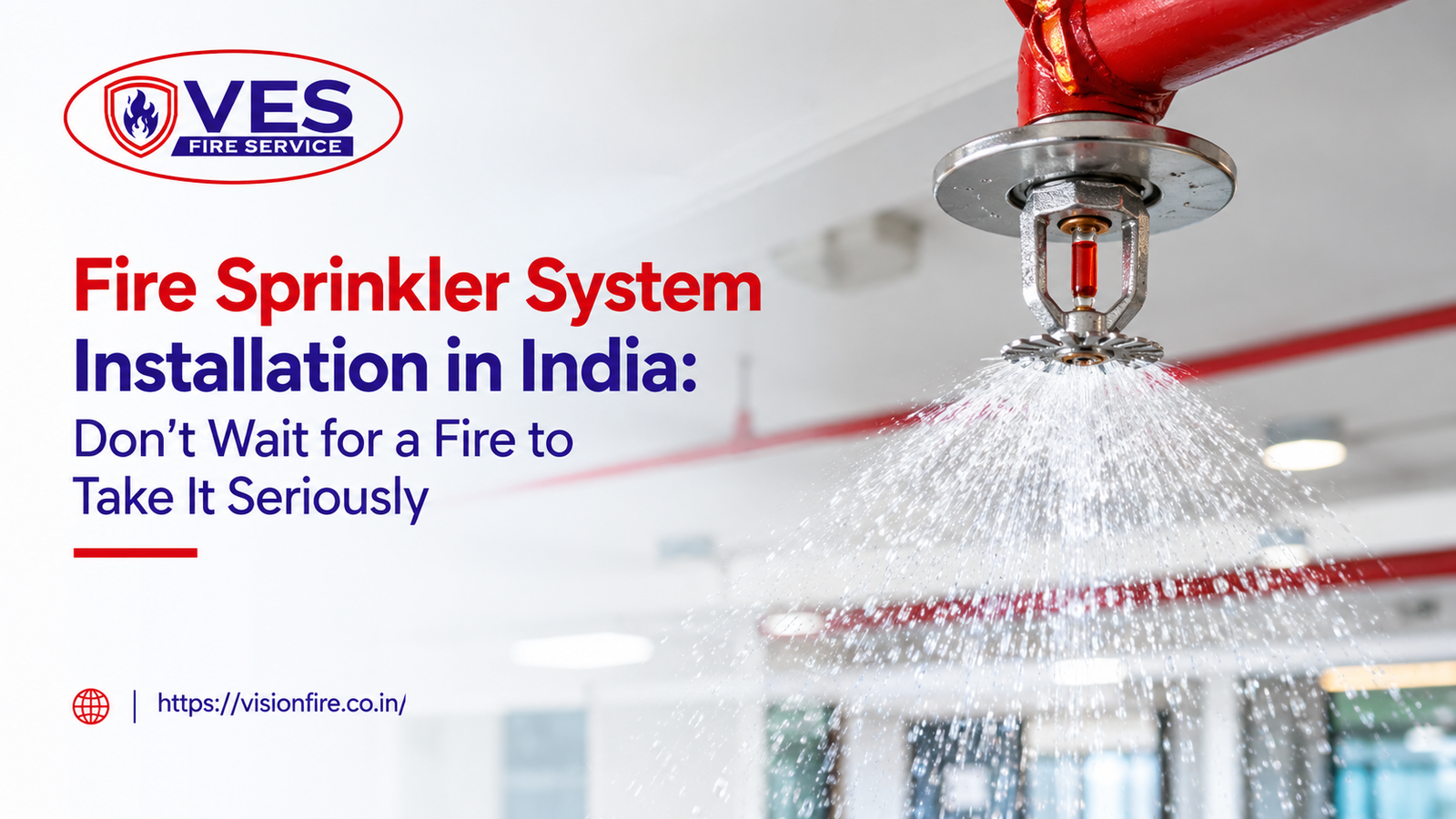
An automatic fire sprinkler system is a network of pipes filled with water (or air, in some types) connected to heat-activated sprinkler heads installed along the ceiling.
Each head has a sealed glass bulb or fusible link. When heat around it reaches a set temperature, the bulb bursts and water sprays over the fire area. Only the heads near the fire open, so water damage stays limited.
Contrary to popular belief, sprinklers do not all go off at once. This is a common myth from movies.
Common Types of Sprinkler Systems
Choosing the right type matters as much as installing one:
- Wet pipe system: Pipes always hold water. It is the most common and reliable type for offices, malls and residential towers.
- Dry pipe system: Pipes hold pressurized air, and water enters when a head opens. It suits cold storage or unheated spaces.
- Pre-action system: Needs two triggers, such as a detector and a head, before water flows. It is ideal for data centers and archives.
- Deluge system: All heads are open, and water discharges together. It is used in high-hazard areas like chemical plants and fuel storage.
A qualified engineer should select the system after studying your building’s occupancy, ceiling height, storage pattern and fire load.
Sprinkler Head Temperature Ratings
Sprinkler bulbs are color-coded by activation temperature. Red bulbs typically activate at 68°C, yellow at 79°C and green at 93°C. Using the right rating for the room, such as a kitchen versus a normal office, avoids false activation and delayed response.
Where Fire Sprinkler System Installation Is Needed
Sprinklers are not only for large industries. You should seriously consider installation in:
- Factories, godowns and warehouses
- Shopping malls, showrooms and offices
- Hospitals, schools and hotels
- High-rise residential buildings
- Parking basements and data rooms
Under the National Building Code of India (NBC 2016, Part 4 on Fire and Life Safety), many building categories above certain height and area thresholds must have automatic sprinklers. Exact requirements also depend on your state fire rules and local fire department, so always check them for your property.
Fire Safety Compliance in India: What You Should Know
Strong fire safety compliance protects you in three ways: legally, financially and morally.
Authorities usually expect systems to be designed and installed as per Indian standards such as IS 15105 for sprinkler systems, in line with NBC guidelines. Many cities require a fire NOC (No Objection Certificate) before occupancy and periodic renewals afterward.
Insurers also look closely at fire protection. A properly installed and maintained sprinkler system can support your claim position and, in some cases, help reduce premiums. Policies and rates differ, so confirm with your insurer.
Skipping compliance may save money today but can lead to penalties, sealing notices or rejected claims after a loss.
Key Steps in a Professional Installation
A reliable installer follows a clear process:
- Site survey and risk assessment: The team studies layout, hazards and water availability.
- System design and hydraulic calculation: Pipe sizes, head spacing and water demand are calculated.
- Water supply planning: This includes tanks, fire pumps (main, jockey and standby) and pressure requirements.
- Material supply: Quality-certified pipes, valves, alarm gongs and sprinkler heads are selected.
- Installation and pipework: Work is done with minimal disruption to your operations.
- Testing and commissioning: Pressure testing and flow checks confirm the system performs as designed.
- Handover and training: Your staff learns basic operation and what to do during an alarm.
Sprinklers work best as part of a complete setup. Pairing them with a fire alarm system, fire hydrant landing valves, hose reels and portable fire extinguishers gives you layered protection.
Fire Sprinkler System Maintenance: The Step Most People Ignore
Installation is only half the job. A system that is never inspected can fail exactly when it is needed. Painted-over heads, closed valves, corroded pipes and weak pump pressure are common problems found during audits.
Regular Fire Sprinkler System Maintenance should include:
- Checking control valves are fully open and locked
- Inspecting heads for paint, dust, damage or leaks
- Test-running fire pumps on a schedule
- Verifying water tank levels and pressure gauges
- Flushing pipes and testing alarm devices
An Annual Maintenance Contract (AMC) with a trusted provider keeps inspections consistent and documented, which also helps during fire department audits and insurance reviews.
How to Choose the Right Installation Partner
Price matters, but it should never be the only factor. Before hiring, ask:
- Do they follow Indian standards and NBC guidelines?
- Do they use certified, quality-tested components?
- Can they handle design, supply, installation and after-sales support together?
- Do they offer AMC, inspection and safety audits?
- Can they show completed projects and genuine client feedback?
A single-source provider reduces coordination problems between design, installation and servicing. Vision Fire Protection Service, for example, offers fire protection products, installation support, refilling and annual maintenance under one roof, which keeps responsibility clear.
You can view the available fire sprinkler system range and services before you decide.
The Real Cost of Waiting
Installing sprinklers is an investment, but the cost of not having them is usually far higher. Consider what one fire could cost you: damaged machinery, destroyed inventory, delayed deliveries, lost customers, legal liability and, most seriously, harm to employees, tenants or family.
Safety systems are like seatbelts. You hope never to need them, but you will be very glad they are there if you do.
Final Thoughts
Fire safety is not something to schedule “for later.” A well-designed Fire Sprinkler System Installation, supported by regular maintenance and proper compliance, gives your property round-the-clock protection that no manual response can match.
If you are planning a new project, upgrading an older building or unsure whether your current setup meets requirements, speak to a fire protection specialist now, not after an incident.